
'In the run-up to the summit, Trump had indicated that he might strike a nuclear deal in the course of a single meeting or over several days, but as it transpired, Trump departed Singapore soon after the meeting.' 'This raises questions if his aspirations for an ambitious outcome had been scaled back,' says Rajaram Panda.

'China is constantly probing India's weaknesses.' 'The challenge is to implement a strategy that will allow India to buy time, gather its strength, and eventually counter China,' recommends Harsh V Pant and Vinay Kaura.

Answering critics, she said in the latest arrangement, the level of talks on terror has been raised as this issue will now be dealt with by the national security advisors instead of foreign secretaries as earlier.
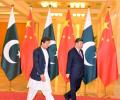
Both leaders also exchanged views on the situations in South Asia, an official Chinese statement said about the meeting between Xi and Khan.
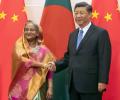
'Beijing is comfortable with Hasina's pragmatism -- perceived as 'pro-India', but staying out of Indian orbit and receptive to forging close ties with China and yet, siding with neither neighbour,' says Ambassador M K Bhadrakumar.

Addressing the Congress Working Committee, the president of the party said, ""Misfortunes do not come singly. India has been hit by a terrible economic crisis, a pandemic of huge proportions and, now, by a full-blown crisis on the borders with China. Much of each crisis is attributable to the mismanagement of the BJP-led National Democratic Alliance government and the wrong policies pursued by it."

'Pakistan has worsted India in the Afghan proxy war and the defeat becomes a template of regional politics,' points out Ambassador M K Bhadrakumar.

'In India foreign policy is generally handled by the prime minister.' 'One can clearly see the Vajpayee stamp on all this.' 'Only a person with poetic imagination can weave such a complex web,' says Colonel Anil A Athale (retd).
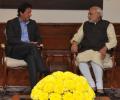
'Any 'de-escalation' that brings down tensions will deprive the BJP of a plank with seamless possibilities to project PM Modi as the 'Iron prime minister' and hype up jingoism in the upcoming election campaign,' notes Ambassador M K Bhadrakumar.

The time is ripe to extend the confrontation with the Chinese to the maritime domain, says former RA&W officer Krishan Varma.

Sanctions against North Korea following its H-bomb test could have serious repercussions and may prove disastrous for all the players involved, says Debalina Ghoshal.
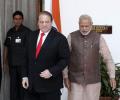
India'Prime Minister Narendra Modi has been congratulated for his speedy diplomacy and his talks with Pakistani counterpart Nawaz Sharif. However, academic Christine Fair and former Pakistan ambassador to US Husain Haqqani dismiss the meeting, calling it merely a photo-op and an exercise in futility. Aziz Haniffa reports.
'In the next three decades up to 2050 there will be three important players at the world level.' 'India, US and China will be playing a very important role globally as the largest economies in the world.' 'These three countries will have to interact with each other much more closely because what they do and what they decide will impact the entire world.'
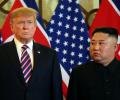
'Despite much hype of optimism, everyone went home empty-handed without a clear picture where they are heading in the future,' notes Dr Rajaram Panda.

Modi's arrival has changed the optics of the visit. There is a different demonstration of the confidence level in the Indian leadership, but not much has changed beyond that, reports Sheela Bhatt/Rediff.com.

'The Modi government will be wasting its time talking to Nawaz Sharif.' 'It would be better if it were to open a direct channel with the Pakistan army,' says Rajeev Sharma.

UNICEF estimates that almost 16 million children and their families are in urgent need of life-saving support. Since mid-August, there have been at least 1,288 reported deaths.

Obama has said that he shares a business-like relationship with Israeli Prime Minister Benjamin Netanyahu

If India is to follow a smart cultural diplomacy, it has unmatched advantages over both China and Pakistan, says Colonel Anil A Athale (retd).

'Xi Jinping is keen that the second Trump-Kim summit happens soonest.' 'Kim is reported to have told Xi that he expects to achieve a result from a second summit that the international community would welcome,' points out Dr Rajaram Panda.

Snooping is one of the oldest peccadilloes of man, observes Ambassador M K Bhadrakumar.

'There is little appetite in the Democratic foreign policy establishment to pick a fight with India.'

There are signs of China's external behaviour becoming more aggressive in the coming years. If that happens, strategic implications for neighbours having territorial disputes with China can become deeper and imperatives can rise for the former to counteract, says D S Rajan
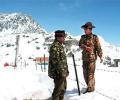
Ten days later, with the Indian Army in full control of the area where the incident took place, New Delhi has signalled a face-saver for Beijing.

'India alone cannot walk the path of peace. It also has to be Pakistan's journey to make,' says Prime Minister Narendra Modi at the government's geo-political flagship initiative "Raisina Dialogue-II".

'There will be much for President Trump and Prime Minister Modi to discuss including growing Chinese military cooperation with Pakistan, which heralds a new attempt by China and Pakistan to neutralise India's influence in its Indian Ocean neighbourhood,' notes Ambassador G Parthasarathy.

The State Department and the White House too said that the US expects Pakistan to take decisive action against terrorists operating from its soil.

As the pandemic unfolded, the India-China relationship has come under severe stress. To restore normalcy, agreements between the two countries must be respected scrupulously in their entirety. Where the Line of Actual Control is concerned, any attempt to unilaterally change the status quo is unacceptable, declares External Affairs Minister Dr Subrahmanyam Jaishankar.
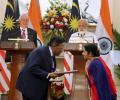
Considering the common linkages, high-level trust, complementarities, and convergent interests between the two nations, Malaysia has the potential to become India's key partner in Southeast Asia, says Dr Rahul Mishra.
'None of these three countries -- Turkey, Iran or Malaysia -- ever made a hostile move against India to support the Pakistan-based terrorist elements,' notes Ambassador M K Bhadrakumar.
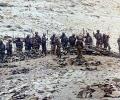
In fact, given the current tensions and massed troops on both sides, there is a danger that the LAC will become more like the Line of Control with Pakistan, a heavily fortified and strongly defended border where weapon fire exchanges regularly occur. Indeed, Stratfor Worldview research has listed a sharp increase in new Chinese facilities along the LAC in 2019-20.

Flexing its muscles over Taiwan, China on Monday sailed its aircraft carrier close to the estranged island amid tensions with the US following President-elect Donald Trump's telephone call with the Taiwanese president.

'This novel format of diplomacy -- the informal summit -- will not only facilitate bilateral communication and reduce miscalculations at the very top level of the two governments, but possibly open the space for China and India to speak in one voice on various issues of mutual concern,' note Feng Renjie and Ding Kun Lei

Both Mahinda Rajapaksa and Modi have learnt from their past mistakes. Modi has understood that Rajapaksa is a 'forever politician' that India has to live with, observes Ambassador M K Bhadrakumar.

'After many rudderless years, India and Japan have prime ministers with a sense of purpose and direction,' says Brahma Chellaney.
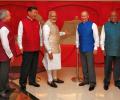
'The crux of the matter is that our narrative lacks credibility with world capitals,' argues Ambassador M K Bhadrakumar.
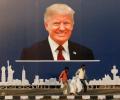
'It's the first-ever US presidential visit which is specially planned for India.' 'The standalone visit itself has achieved something already. Don't underestimate it.' Sheela Bhatt gives us an exclusive glimpse of what the Modi government hopes to achieve from Trump's visit.

The clichd path of conducting 'uninterrupted and uninterruptable' bilateral dialogue with Pakistan to improve ties remains unimplemented and un-implementable under prevailing circumstances that are unlikely to alter in the near future, says Rahul Bedi.
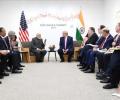
'The change of vocabulary in the India-US conversation was significant and refreshing.' 'It matched the styles of Trump and Modi.' 'The differences were not papered over, but there was determination to resolve them in the days ahead,' says Ambassador T P Sreenivasan.
New Delhi and Beijing are the only two regional capitals that have commented on US President Donald Trump's speech on August 21 outlining the way forward in Afghanistan. The Indian foreign ministry statement was effusive in praise, while the Chinese statement has been one of cautious and guarded hope. Delhi has identified itself with Trump's Afghan strategy, whereas the Chinese stance is calibrated -- observant and objective, keeping a distance, says Ambassador M K Bhadrakumar.
